Biokleen Enzyme Cleaners
We track 7 Biokleen products, 4 of them with a page of their own. Prices run from $9.99 to $34.98 across two retailers. Each product carries its own dated rating pool (4.6 from 8,300 buyers on amazon.com; 4.6 from 3,200 buyers on amazon.com; 4.5 from 3,100 buyers on amazon.com; 4.3 from 348 buyers on amazon.com); the line has no single brand-wide score here.
- Owned by PurposeBuilt Brands
- EPA Safer Choice United States Environmental Protection Agency EPA lists these products as certified and flags the partner company as overdue for its yearly Safer Choice review.
Where Biokleen Sits on the Enzyme Cleaner Shelf
Biokleen is a laundry and fabric label. The directory tracks seven of its products, four of them with a page of their own. Its tracked products cover more than one shelf: laundry and fabric; carpet and hard surfaces. The other three are tracked as catalog rows without pages. Prices across the tracked line run from $9.99 to $34.98. The cheapest way in is Bac-Out at $9.99. The most-reviewed item is Bac-Out, carrying 8,300 reviews.
Biokleen states the enzyme claim in its own copy for all four products with a page. The listings name amylase, cellulase and protease for the items that name anything. The three catalog-only products carry their own evidence levels row by row, so the count covers the pages, not the whole line.
Biokleen is owned by PurposeBuilt Brands, which also owns Green Gobbler in the directory. A buyer comparing labels inside one house is comparing packaging and price, not competing factories, and the ownership record prints with every badge it rests on.
Buyer ratings for this line sit in separate venue pools rather than one brand-wide figure: 4.6 from 8,300 buyers on amazon.com, 4.6 from 3,200 buyers on amazon.com, 4.5 from 3,100 buyers on amazon.com and 4.3 from 348 buyers on amazon.com. Each number belongs to the venue that publishes it, and they are not averaged here. In this category the outcome rides on soak time in the wash, not on the label. The wash cycle is the short part. The soak is where the chemistry gets its chance to work.
The line is stocked by two retailers we track.
What Biokleen Discloses About Its Own Formulas
Biokleen states the enzyme claim in its own product copy for 4 of the 4 products with a page here.
The listings name amylase, cellulase and protease for the listed items. Named limit on that: we did not run a California disclosure check, so read it as not located in what we read rather than as does not exist.
A label is not an ingredient list. What a safety data sheet actually discloses sets out what a manufacturer has to name and what it may withhold. What separates an enzyme cleaner from a detergent is the one-sentence version. An oxygen bleach is the other thing sold for the same stains, and whether OxiClean is an enzymatic cleaner works through what separates the two chemistries.
Biokleen Enzyme Cleaners, Compared on Price and Rating
For Laundry and Fabric
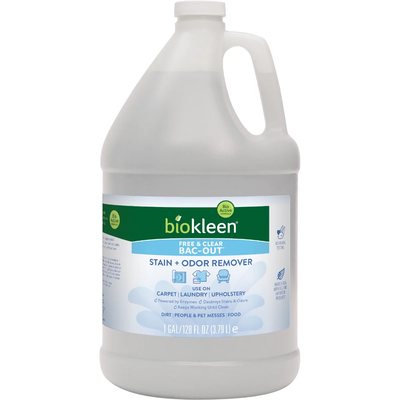
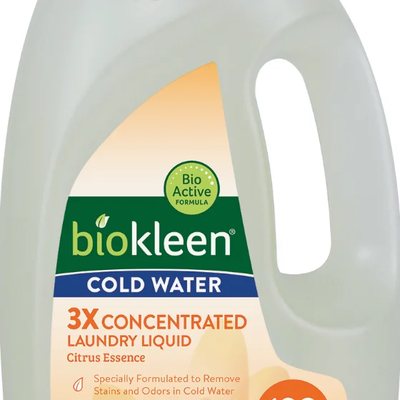
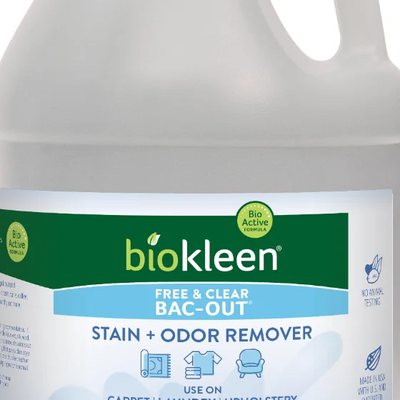
For Carpet and Hard Surfaces
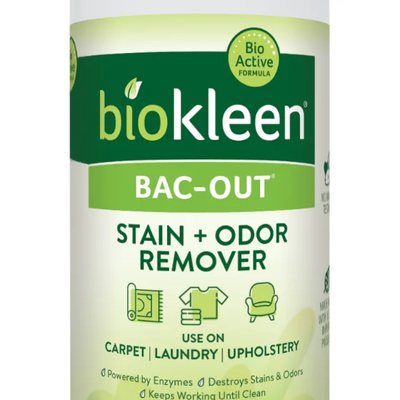
Every Other Biokleen Product We Track
Another three Biokleen products we track, none of them with a page of their own.
| Product | Size | Price | Evidence | Where to buy |
|---|---|---|---|---|
| Bac-Out Bathroom Cleaner | 32 fl oz | $12.99 | Enzyme claimed | biokleenhome.com |
| Laundry Detergent Sheets | Not published | $29.99 | Enzyme named | biokleenhome.com |
| Laundry Liquid Sport | 64 fl oz | $21.99 | Enzyme named | biokleenhome.com |
Where to Buy Biokleen Enzyme Cleaners
We always recommend buying directly from the brand: Biokleen publishes current sizes and availability on its own site.
Biokleen is also available at Amazon, Biokleen.
Using the Published Biokleen Product Details
What decides it in a wash is soak time rather than brand. Give it longer rather than hotter, because the reaction runs only while the fabric is wet.
Pour enough to travel as far as the mess did, and keep it wet. How to use an enzyme cleaner properly is the whole method, and the volume arithmetic works out how much for a specific spot size. What is safe on the same spot covers the chemical that kills the treatment before it starts. On skunk, onion and a fresh sharp note, oxidation is the right chemistry and this is not the bottle.
Evaporation ends the reaction, not the clock: how long the spot has to stay damp gives the window by surface. When a bottle from this line did nothing, the six things that go wrong is where to start. Whether the chemistry works at all is the argument underneath that.
There is a case against buying any of this, and where an enzyme cleaner is the wrong purchase makes it. The method guides are indexed by the mess and the surface it landed on.